


Laser Marking · Metal
Laser Marking Metal Parts: Serials, UID & UDI Codes, Logos
Accubeam laser-marks permanent part numbers, serials, data matrix codes and logos on stainless steel, titanium, aluminum, steel, brass and coated metals. Annealed marks that remove no material, etched and engraved marks, and verified UID and UDI codes, on parts you send us or parts we cut and make, in one Sarasota shop under AS9100D. Every new job starts with sample parts, so you approve the mark before production.
What buyers need from a metal marking supplier
A mark on a metal part is a record that has to last as long as the part. These are the problems engineers and buyers ask us to solve.
Codes that scan the first time
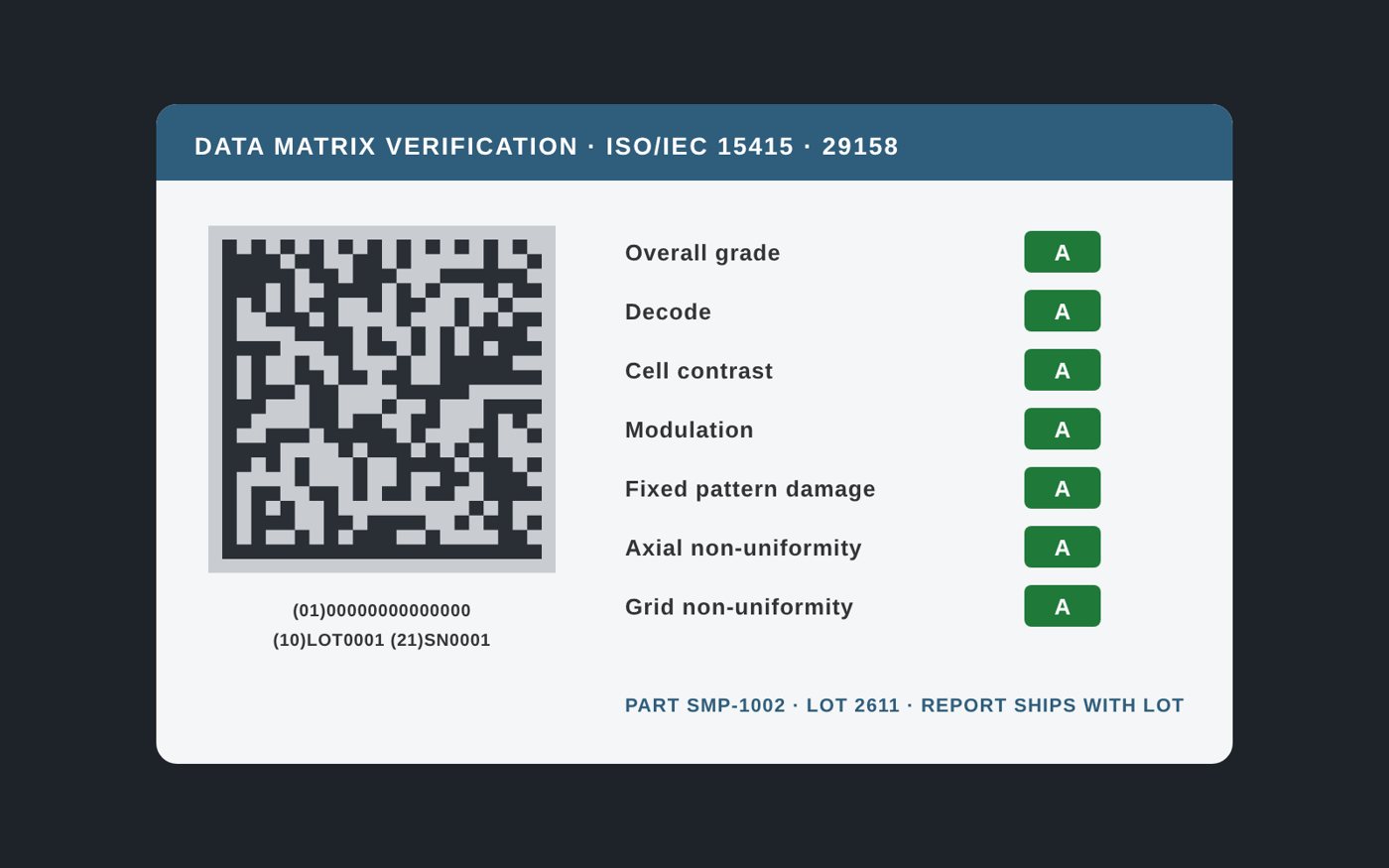
Every data matrix graded on Cognex verifiers to ISO/IEC 15415 or 29158 (AIM DPM), with grade reports, so codes read at your receiving dock and in the field.
Marks that survive the next process
Passivation, anodize, paint, autoclave, heat and salt spray. We set the mark for what the part goes through next and prove it on your sample parts.
No harm to the part
Annealed or shallow marks on fatigue-sensitive and medical parts, depth held to the drawing, and nothing raised on sealing or mating surfaces.
The right data on every part
Serials, lots and UIIs marked from your data file and checked against it, with no skips or duplicates, and a record of what went on each part.
Your spec, followed
MIL-STD-130, AS9132, AS478, 21 CFR 801.45 and your drawing’s mark content, size and location.
Parts back fast and undamaged
Customer-supplied parts are fixtured, counted and packed to protect finished surfaces, with fast quoting and fast turnaround.
Samples first
We start every new job with sample parts
Send us a few parts in the production material and finish. We mark them, grade any codes and send them back before you place a production order. It’s how we prefer to work: the alloy, the finish and what happens after marking all change the result.
Laser, settings and mark type are proven on your alloy and finish, with codes graded.
The approved sample is the standard every production lot is marked and checked against.
Run the samples through your passivation, paint, autoclave or salt spray before you commit.
Metal marking capabilities
Traceability marks, the right mark type for each metal, and marking on parts of almost any shape.
UID / IUID Marking
MIL-STD-130 marks and plates for defense parts and equipment.
- Data matrix with UII constructs and human-readable
- Direct part marks or UID plates
- Marking through CARC
- UII data files for IUID Registry submission
- Graded with reports
Medical UDI Marking
Permanent UDI marks on reusable instruments and devices.
- GS1 and HIBCC data matrix plus plain text
- 21 CFR 801.45 direct marking
- Samples marked for your passivation and sterilization tests
- IQ/OQ/PQ process validation support
- Customer-supplied implants marked
Serials, Lots & Codes
Sequential and variable data from your list, database or file.
- Serial, lot and date codes
- Data matrix, QR and linear barcodes
- Part numbers, revisions and logos
- Records of what went on each part
Annealed (Dark) Marks
A dark oxide mark below the surface on stainless and titanium, with no material removed.
- Smooth surface: nothing to trap debris
- Medical, food-equipment and aerospace parts
- Parameters set for passivation (ASTM A967)
- 300 and 400 series, 17-4, titanium
Etched & Engraved Marks
High-contrast etched marks, or engraved marks you can feel.
- Steel, tool steel, aluminum, brass, copper
- Deep marks that survive blasting and paint
- Tooling, blades, fixtures and gauges
- Depth checked against your callout
Anodized & Coated Metal
Bright marks through anodize, paint and plating.
- Black and color anodized aluminum
- Painted, powder-coated and CARC parts
- Nickel and chrome plated parts
- Back-lit legends by paint removal
Rotary & Circumferential
Marks around tubes, shafts, pins and rings.
- Rotary on three fiber lasers
- Cannulas, drivers, shafts and punches
- Graduations and depth marks
- Programmable X/Y for multi-part fixtures
Nameplates, Tags & Labels
We cut the plate and mark it, or mark the plate you send.
- Stainless and anodized aluminum plates
- Data, rating and caution plates
- TESA tamper-evident secure labels
- Asset and equipment labels
Marked Parts We Make
Parts we laser cut, form, grind or machine leave already marked.
- Part numbers on cut and formed parts
- Serialized brackets, busbars and plates
- Marked shims with thickness
- One supplier, one quality system
Choosing a mark type on metal
The right mark depends on the metal, its finish and what happens to the part after marking. We’ll recommend one when we quote.

Anneal mark
Dark, smooth mark on stainless and titanium. Can be set up to hold through passivation.
Best for: medical, food equipment, fatigue-sensitive aerospace parts

Etched mark
Fast, high-contrast mark on bare metals for codes and text.
Best for: serials, data matrix codes, logos on steel and aluminum

Engraved mark
A mark you can feel that survives wear, blasting and paint.
Best for: tooling, castings, parts painted or blasted after marking

Ablated mark
Anodize or paint removed for a bright, sharp mark.
Best for: anodized plates and panels, coated and CARC parts
Metal marking across the industries we serve
Each industry asks something different of a mark. Here’s what we hear most, with a page for each.
AerospaceAerospace ›
Data matrix part marks to your drawing, low-stress annealed marks on fatigue-sensitive surfaces, and UID labels and plates.
Military & defenseMilitary ›
MIL-STD-130 UID with UII data files, marking through CARC, data plates and firearm markings (FFL 07 / SOT).
MedicalMedical ›
21 CFR 801.45 UDI on reusable instruments, samples marked for passivation and autoclave tests, and graded codes.
Energy & electricalEnergy ›
Transformer and switchgear nameplates with bar codes, and phase and part marks on copper busbars.
Auto & transportationAuto & Transportation ›
Serialized components, certification plates and marked brackets for builders and specialty vehicles.
Marine, industrial & electronicsIndustrial ›
316 stainless plates, tool and blade part numbers, valve tags, chassis and busbar marking.
Metals we mark
We mark almost any metal. Finish and post-processing matter as much as the alloy, so tell us both.
| Metal | Typical marks | Notes |
|---|---|---|
| Stainless steel (300, 400, 17-4) | Anneal, etch, engrave | Mark before passivation; samples tested in your process |
| Titanium (incl. Ti-6Al-4V) | Anneal, etch | Common for implants and instruments; customer-supplied implants marked |
| Aluminum, bare | Etch, engrave | Gray to white marks; deep engraving for durability |
| Anodized aluminum (Type II, hardcoat) | Ablation | Bright mark through the anodize; hardcoat takes more energy |
| Carbon, alloy and tool steel | Etch, engrave, anneal | Engrave deeper when parts are blasted or painted after marking |
| Brass, copper and busbars | Etch, engrave | Phase, rating and part marks on copper and aluminum busbars |
| Plated parts (nickel, chrome, zinc) | Etch, ablation | Mark on or through plating |
| Painted, powder-coated and CARC parts | Ablation | Marking through CARC |
 Cannulated surgical driverCircumferential mark
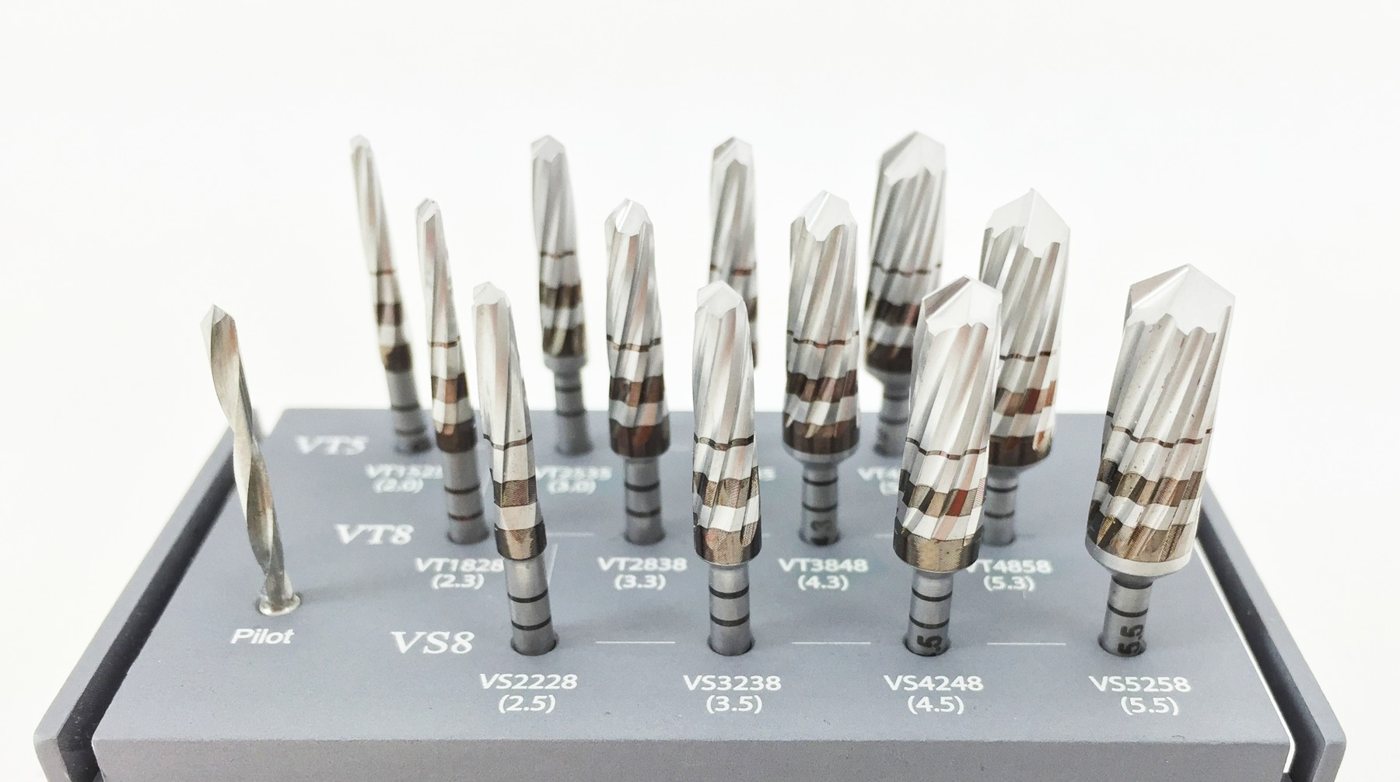 Marked instrument trayStainless kit
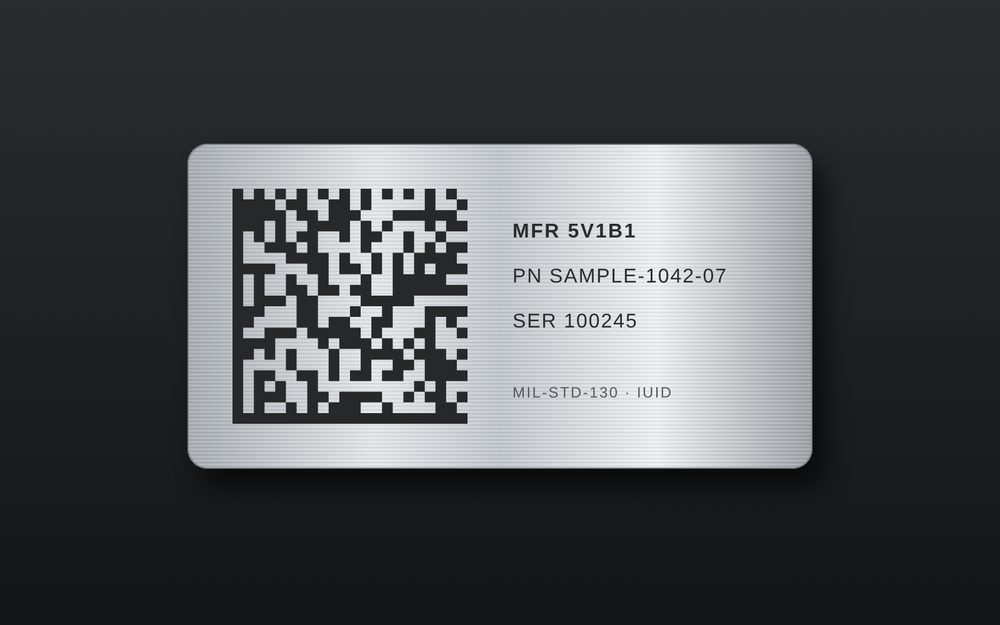 MIL-STD-130 UID labelStainless, sample data
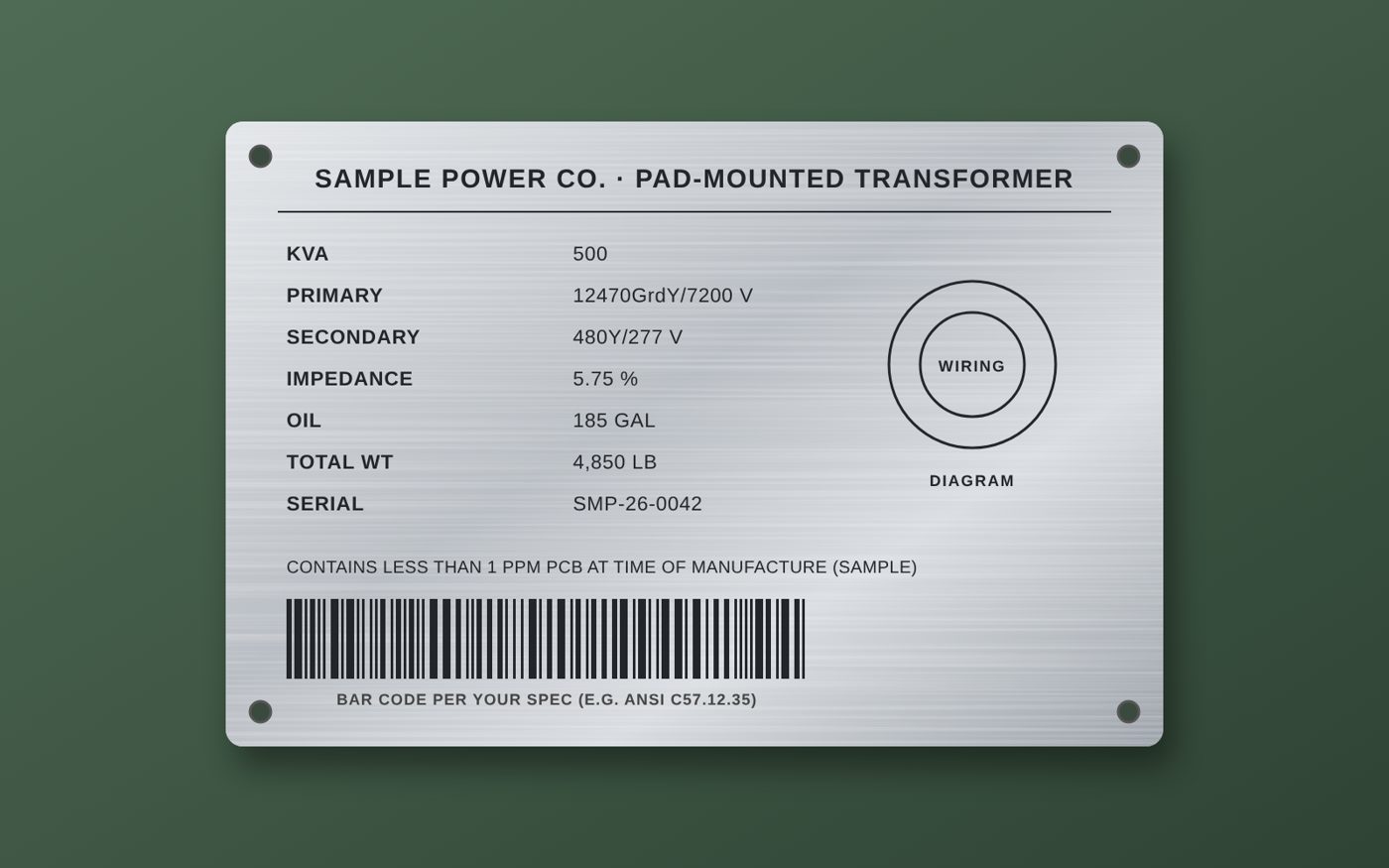 Transformer nameplateAnodized, sample data
Verified marks and documentation
Metal marking runs under our AS9100D and ISO 9001:2015 quality system, certified by NSF-ISR.
- Every data matrix graded on Cognex verifiers (ISO/IEC 15415 and 29158)
- Grade reports shipped with the lot
- Sample parts marked, graded and approved before production
- Marking parameters recorded and locked once approved
- Serial and UII data checked against your file
- First article inspection on new parts
- Certificate of Conformance with every shipment
How a metal marking order works
Every new job starts with samples, so production matches what you approved.
Send sample parts
A few parts in the production material and finish, plus the drawing or mark spec, content and location, and what the part goes through after marking.
We mark the samples
We mark your sample parts and send them back with grade reports for any codes, so you can test them in your own process and see exactly what production will look like.
First article
Once approved, we lock the parameters and mark, verify and inspect the first article.
Production
Lots ship with a C of C, grade reports and data records. Parameters stay locked unless you approve a change.
Laser marking metal FAQ
Will laser marking weaken my part?
An annealed mark removes no material and leaves the surface smooth, so it’s the usual choice for fatigue-sensitive and medical parts. Marks with depth act like small notches, so on critical surfaces we hold to your drawing’s depth and location limits.
Will the mark survive passivation and autoclaving?
It can, when the mark is set up for the alloy and finish. We mark sample parts for you to run through your passivation (citric is gentler on marks than nitric) and sterilization before we lock the parameters.
Do you mark samples before production?
Yes, and we prefer to. Marking samples on your actual parts proves the laser, settings and mark type work on your alloy and finish, and gives you an approved part that sets the expectation for every production lot.
What grade will my data matrix codes get?
We grade every code and report the result. We mark to the minimum grade your drawing or spec calls for, using the ISO/IEC 15415 or 29158 method it names.
Can you provide UII data for the IUID Registry?
Yes. For MIL-STD-130 work we can supply UII data files for your Registry submission along with the marked parts or plates.
Can you mark round and curved parts?
Yes. Our fiber lasers have rotary axes for tubes, shafts, cannulas and rings, and we fixture curved and odd-shaped parts.
Do you make color marks on stainless?
We don’t offer color marking as a standard service. For contrast on stainless and titanium we use dark annealed marks.
Do you mark parts we send you?
Yes, most marking work is on customer-supplied parts. We plan fixtures, counts and return packing before your parts arrive.
What’s the largest part you can mark?
We’re set up for both small and large pieces, from tiny instruments and pins to large plates and heavy parts. What fits depends on the type of mark, so send the part size and weight and we’ll confirm.
What’s your minimum order?
There’s no fixed minimum and no hard tooling. Samples, prototypes and production lots are all routine.
Related capabilities
Have metal parts to mark?
Send sample parts with the drawing and mark spec, and tell us what the part goes through next. We’ll mark samples and come back with results and a quote.